Tier B claim
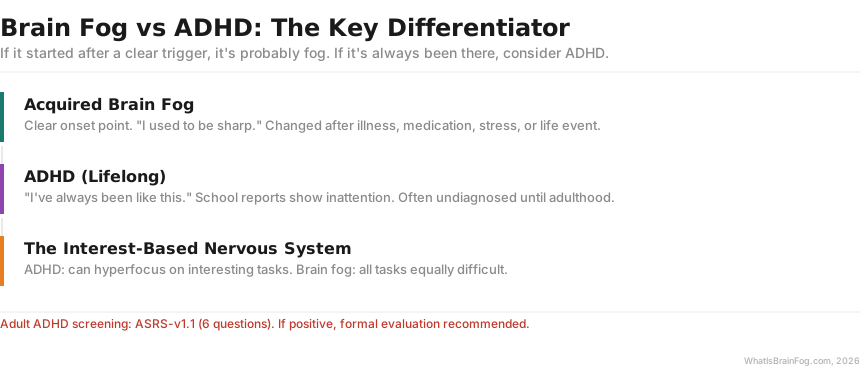
Validated ADHD screening can support differential assessment when interpreted with clinical context.
Cognitive · self screen
Adult ADHD Self-Report Scale - 6-question screener
Quick Answer
Adult ADHD Self-Report Scale - 6-question screener
on site
Validated questionnaire
Adult ADHD Self-Report Scale - 6-question screener
A screening score can support a discussion, but it does not confirm a diagnosis on its own.
Test Visual
Preparation, interpretation, and clinician next step for ASRS-v1.1 Screener.
Step 1
Complete all 6 Part A items
Answer based on your usual behavior over the last 6 months, not one stressful day.
Step 2
Score before interpretation
Count positive responses exactly according to ASRS scoring instructions.
Step 3
Discuss differential causes
Compare with sleep deprivation, anxiety, depression, medication effects, and post-viral changes.
normal
Within lab range; compare with your target context (Validated questionnaire).
Result may be acceptable but still needs symptom correlation and trend review.
borderline
Near thresholds or inconsistent with symptoms.
Consider repeat testing, timing factors, and related markers before conclusions.
abnormal
Outside expected range or clearly discordant with baseline.
Use clinician-guided follow-up and structured differential workup.
Tier B claim
Validated ADHD screening can support differential assessment when interpreted with clinical context.
Abnormal results may indicate involvement of these underlying conditions:
Click any cause above to learn about symptoms, tests, and evidence-based interventions.
This information is for educational purposes only. Typically, consult with a qualified healthcare professional.