STORY ANALYZER
Story Analyzer
Start with a short story in your own words. The analyzer narrows it into a shortlist, asks a few clarifying follow-ups when needed, and then shows the next actions worth testing first.
You get a focused summary for discussion and follow-up, not a diagnosis.
Start
Write 3-4 concrete lines about onset, what travels with the fog, and what predictably shifts it.
Narrow
If the story is still messy, the analyzer asks a few short clarifiers instead of forcing a full quiz.
Act
See the best fit, nearest overlaps, and the tests or low-risk experiments worth prioritizing now.
Gentler Start Use the guided analyzer builder If writing a full story feels heavy right now, answer a few short prompts and we will turn them into a usable starting draft.
BUILDER TOOL
GUIDED START
If writing your full story feels like too much right now, answer a few short questions and we will build a cleaner starting draft for the analyzer.
Answer at least 3 questions. You can still edit the story before running the analyzer.
Start Here
Tell the story in your own words
Start with 3-4 concrete lines about when it started, what comes with it, and what changes it. If the story is still broad, the analyzer asks up to 3 short follow-ups before it shows the strongest matches.
1. Start
Write when it started, what travels with it, and what reliably makes it worse or better.
2. Narrow
If the story is still broad, you get a few short clarifiers instead of a long quiz.
3. Act
See the best fit, nearest overlaps, and the next actions worth testing first.
What helps most
- →When this started and what changed
- →Which symptoms seem linked and when they hit
- →What makes it worse, better, or more predictable
- →Relevant meds, conditions, or measurements you already have
Your story is processed securely and never sold. READ POLICY
Starter examples (optional)
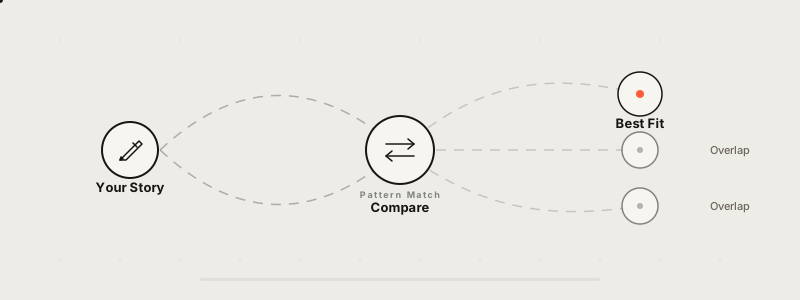
Your story is compared across nearby explanations before the final shortlist is shown.
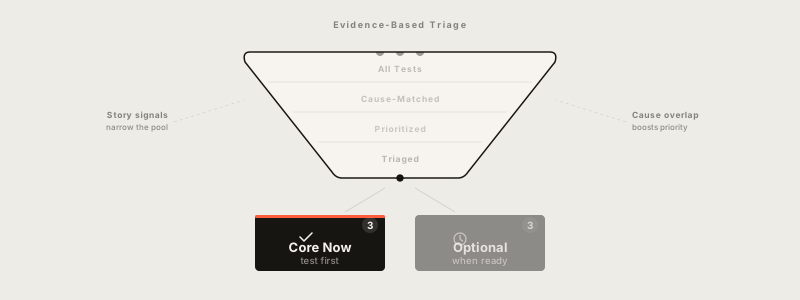
Results split into core-now tests and optional-later tests to keep next steps focused.
Related Causes
These causes are common confusion pairs when stories lack strong timing detail.
How It Works
1
Describe What Is Happening
Write naturally: when it started, what changed, what makes it worse, what helps, and what seems to travel with it.
2
Compare Likely Explanations
We compare the strongest fits, the nearby overlaps, and the clues that make one explanation stronger than another.
3
Watch What Changes
See what strengthens or weakens the shortlist, what to measure next, and which low-risk steps are worth tracking over the next few days.
Built for real-world messiness: short histories, overlapping symptoms, and the need for a cleaner next step than random guessing.
10
Mechanism Angles
8
Comparison Angles
72
Causes Linked
<1s
Processing Time
STRUCTURED
Guided Intake
Build a cleaner starting story
MEASURE
Biomarkers & Tools
Measurements to discuss
ACTION
Low-Risk Experiments
Try low-risk next steps
This tool is for educational purposes only. Typically, consult with a qualified healthcare professional.